The Client
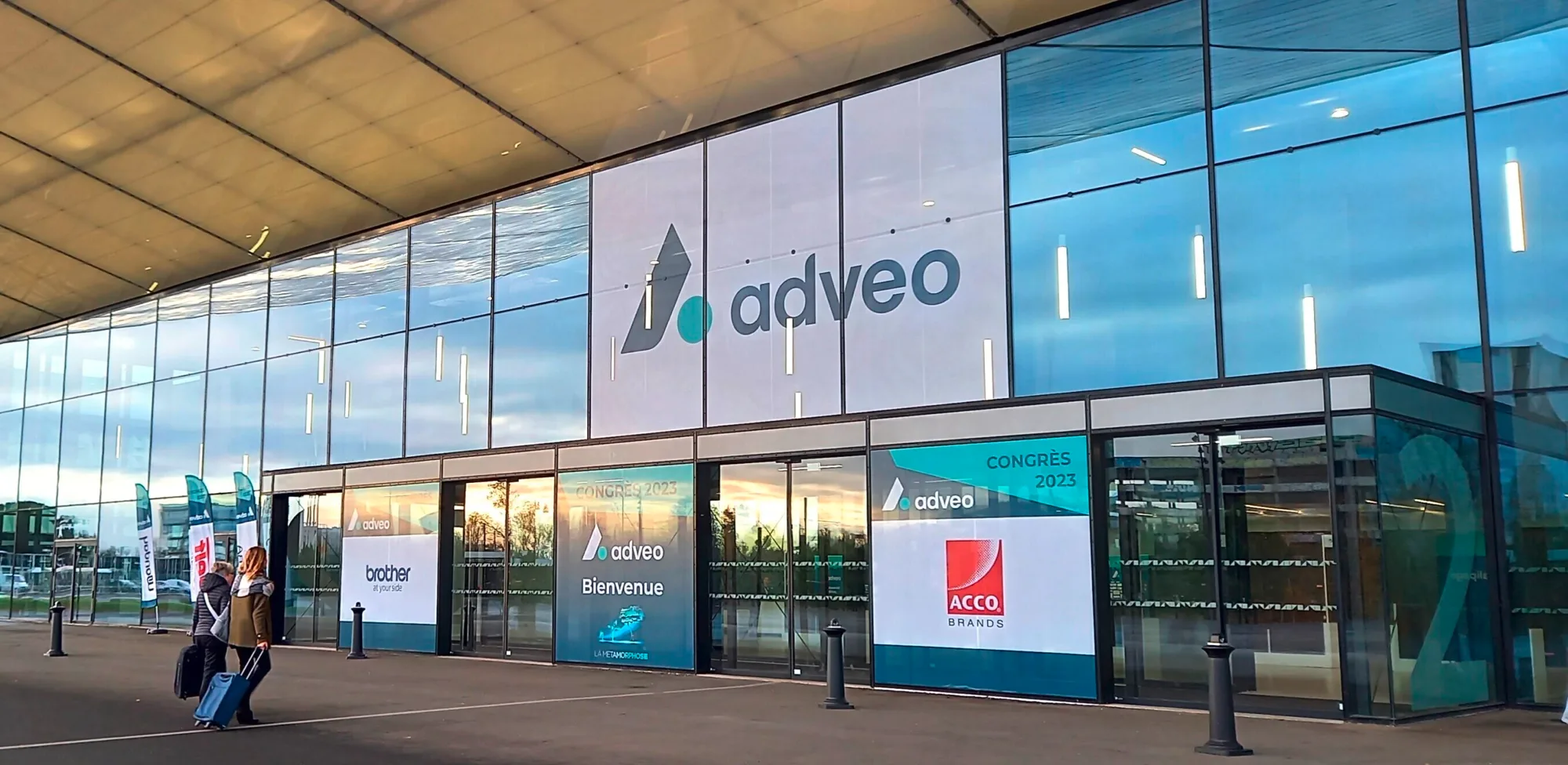
ADVEO Group is a “centrale d’achat”, a purchasing and distribution network that federates a large community of independent member resellers (adhérents) across office, workplace, and professional supplies. Rather than operating as a single retailer, ADVEO sits at the centre of an ecosystem: it negotiates and aggregates supply, runs the shared commercial backbone, and equips each member with the tools to sell under its own identity, to its own customers, on its own terms.
This model is what makes ADVEO powerful, and it is also what makes its technology demanding. The group animates several well-known retail networks, including Calipage, Plein Ciel, Buro+, and Top Office, the latter joining the group in 2023. Every adhérent is, in practice, a business of its own, with its own catalogue scope, its own pricing logic, its own back-office systems, and its own customers. The platform that serves them has to hold all of that diversity together without flattening it.
The Challenge
We did not start this project from a blank page. We inherited it.
When ADVEO entrusted the dossier to Aleph Front in 2024, the e-commerce estate had grown into one of the most complex Intershop landscapes we had ever encountered: a network scaling toward 250 distinct storefronts, each tied to the specific reality of an individual adhérent. The brief was not simply to build, it was to stabilise, to industrialise, and to bring a sprawling, heterogeneous estate back under a single coherent model, without disrupting the members already trading on it.
The complexity sat on several layers at once:
- A central SAP ERP acting as the commercial and financial backbone for the group, with the master flows that every storefront ultimately depends on.
- Per-adhérent ERPs. Many members ran their own back-office systems, which meant the platform could not assume a single source of truth. It had to reconcile the central SAP reality with each member’s own operational reality.
- Per-adhérent PIM and DAM. Product information and digital assets did not arrive in one clean stream. They came from multiple repositories, in multiple structures, with different governance and different levels of completeness.
- Per-adhérent pricing and business rules. Pricing was not a single table. Each member carried its own pricing conditions, discount structures, customer-specific terms, and commercial rules, all of which had to be respected exactly, at scale, across hundreds of sites.
- Scale and consistency. Holding nearly 250 storefronts to a consistent standard of quality, performance, and maintainability, while still letting each one express its own catalogue, pricing, and identity, was the central engineering tension of the entire programme.
In short: one group, one SAP core, and a constellation of members each behaving like an independent business. The inherited platform reflected that complexity in a way that had become difficult to operate and to extend. Our mandate was to change that.
What We Built
We re-anchored the estate on Intershop Commerce Management and industrialised it using our E3 accelerator, the same proven onboarding and delivery framework behind our other Intershop platforms, adapted here to the specific demands of a multi-tenant centrale d’achat.
The heart of the solution is orchestration. To reconcile a central SAP ERP with a fleet of per-adhérent ERPs, PIM and DAM repositories, and pricing engines, we deployed Aleph Hub, our proprietary integration and event-orchestration layer, delivered as a fully managed service. Aleph Hub sits between the heterogeneous source systems and the storefront network, normalising flows, buffering load, securing exchanges, and giving each storefront the right data, with the right pricing, under the right rules, without every connection having to be rebuilt site by site. It is what allows hundreds of distinct commercial realities to be served from one governed platform.
Latency was one of the first problems we had to confront. With nearly 250 storefronts each resolving member-specific pricing, catalogue, and business rules against a central SAP ERP and a fleet of per-adhérent back-office systems, every page view risked fanning out into a chain of slow downstream calls. The inherited platform felt it: pricing lookups and catalogue rendering were paying a round-trip penalty on requests that, by their nature, repeated constantly across the network. We solved it with aggressive caching at every layer that could safely hold state — pre-computed and cached pricing results, cached catalogue and PIM/DAM projections, and edge-cached storefront responses — so that the expensive computation behind a price or a product page happened once and was then served from cache to everyone who needed the same answer. Aleph Hub backs this by absorbing and buffering the upstream flows, keeping the caches warm and coherent rather than letting every storefront hammer the source systems directly. The result is sub-second page loads and near-instant pricing across the estate, with the heavy systems shielded from the request volume of hundreds of live sites.
A network of this size and value is also a target. Hundreds of public storefronts carrying live catalogues, member-specific pricing, and commercial terms are exactly what competitors want to harvest and what automated abuse seeks to exploit. To protect the estate, we deployed Aleph WAF, our proprietary web application and traffic protection layer, delivered as a fully managed service. It shields the platform on four fronts at once: competitor and price-scraping bots that try to extract catalogue and pricing intelligence, volumetric and denial-of-service attacks aimed at availability, application-level attacks such as injection and other OWASP-class threats, and credential abuse and malicious bot traffic. Aleph WAF lets ADVEO keep its pricing and commercial data where it belongs, with its legitimate customers, rather than in the hands of scrapers and attackers.
On top of that backbone, we standardised how a storefront is provisioned, configured, and brought online, so that the network became something that could be operated and grown predictably rather than maintained by exception. The arrival of Top Office in the group in 2023 was a direct test of that approach: bringing a further retail network into an already large estate is precisely the kind of scaling event the platform was designed to absorb.
The clearest measure of that stability is operational silence: across 06 months of continuous service, not a single support call has been raised by an adhérent.
Key Features Delivered
- Multi-tenant storefront architecture supporting a network scaling toward 250 distinct adhérent sites from a single governed Intershop platform.
- Central SAP integration providing the master commercial and financial backbone for the group, with reliable, monitored data flows.
- Heterogeneous back-office orchestration through Aleph Hub, reconciling the central SAP ERP with per-adhérent ERPs without forcing every member onto a single system.
- PIM and DAM federation, consolidating product information and digital assets from multiple member repositories into clean, storefront-ready catalogues.
- Per-adhérent pricing and business-rule handling, so that each member’s pricing conditions, discount structures, and commercial terms are applied precisely, at scale.
- Industrialised onboarding via the E3 accelerator, turning the launch and configuration of a new adhérent storefront into a repeatable, controlled process.
- Estate-wide protection through Aleph WAF, defending the storefront network against competitor and price-scraping bots, volumetric and denial-of-service attacks, application-level threats, and credential abuse and malicious bot traffic.
- A stabilised, maintainable estate, bringing an inherited and fragmented landscape back under a single coherent operating model.
The Integration Landscape
| Layer | Role in the platform |
|---|---|
| SAP (central ERP) | Group commercial and financial backbone, master flows |
| Per-adhérent ERPs | Member-specific operational systems, reconciled by Aleph Hub |
| PIM / DAM (multiple) | Product information and digital assets, federated into storefront catalogues |
| Pricing and business rules | Member-specific pricing, discounts, and commercial terms, applied per storefront |
| Aleph Hub | Proprietary managed orchestration layer normalising, securing, and buffering all flows |
| Aleph WAF | Proprietary managed protection layer guarding the estate against scraping, DDoS, application attacks, and bot abuse |
| Intershop Commerce Management | The unified storefront platform serving the full network |
Results
An inherited, fragmented estate brought back under control and onto a single, governed Intershop model.
A storefront network scaling toward 250 sites operated from one coherent platform rather than as hundreds of isolated builds.
Central SAP and per-adhérent systems reconciled through Aleph Hub, removing the need to rebuild integrations site by site.
Per-adhérent pricing, catalogues, and business rules respected exactly, preserving each member’s commercial identity at scale.
Industrialised onboarding through the E3 accelerator, making the launch of new adhérent storefronts a predictable process.
The full estate protected by Aleph WAF, keeping pricing and commercial data with legitimate customers and away from scrapers and attackers.
A platform built to grow with the network rather than to be held together by exception.
Client: ADVEO Group (centrale d’achat)
Platform: Intershop Commerce Management, multi-tenant, with the E3 accelerator, Aleph Hub orchestration, and Aleph WAF protection
Engagement: Inherited dossier taken over and industrialised from 2023
Scope: A network scaling toward 250 adhérent storefronts, central SAP ERP, per-member ERP, PIM, DAM, and pricing integration